
Convergence:
Miguel Osuna
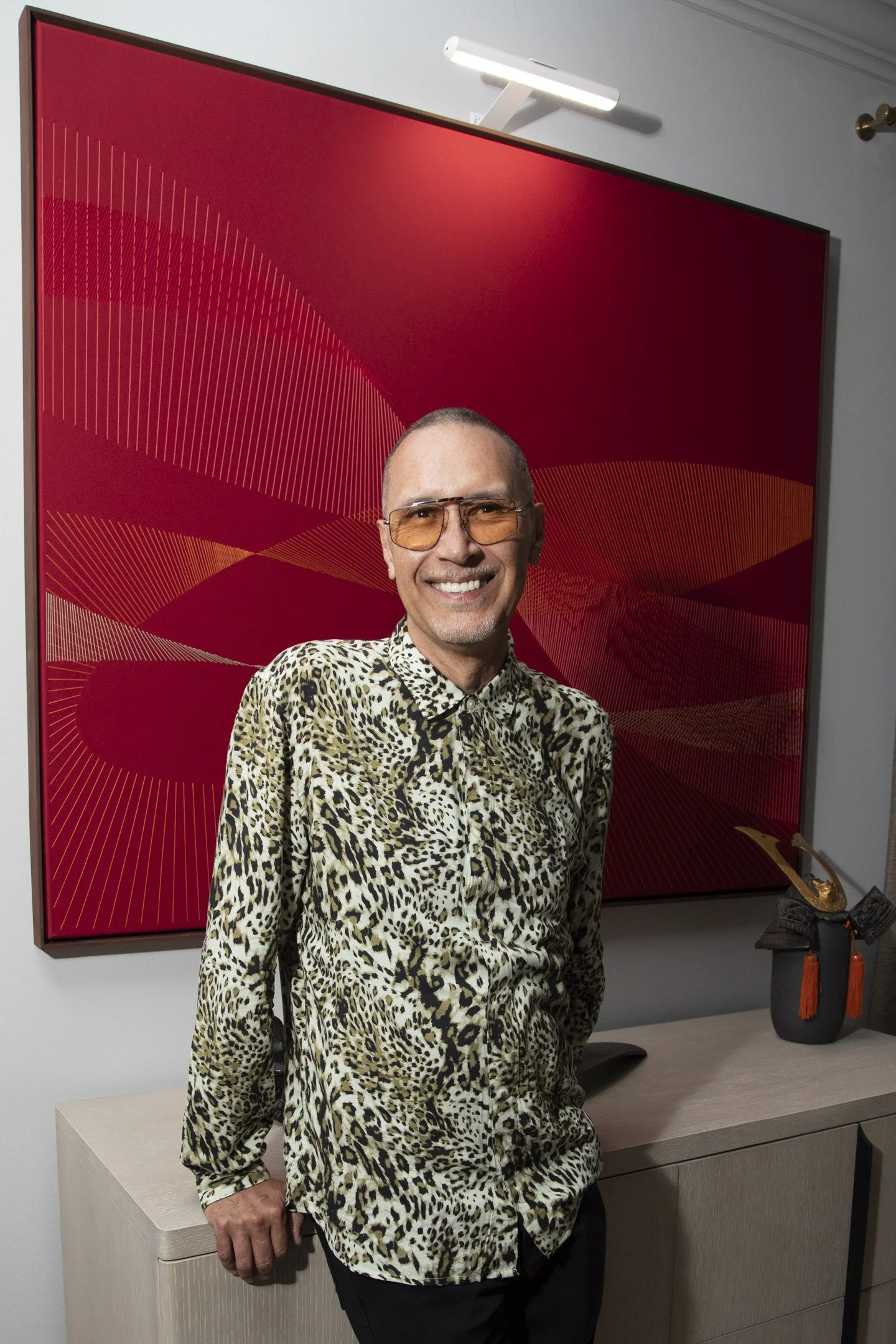
Miguel Osuna believes art is a practice of understanding that provides space and possibility. His works are intimate, personal and often theoretical investigations of the fluidity of life. Osuna’s gestural compositions convey the organic motion and momentum of the unwritten language of energy. They are both intuitive and contemplative in structure and representative of evolutionary ideas manifested through oils, pigments, ink, and resin.
Miguel Osuna has been painting and drawing from an early age. He studied architecture in Mexico, and a year after graduating, moved to Los Angeles. He practiced architectural design in diverse industries through 2001. In 2002 he opened his art studio in downtown L.A.. His studio practice frequently involves investigations on techniques, applications and materials. His works can be found in numerous private and public art collections throughout the U.S. and abroad.
I’ve lived in Los Angeles since the mid-80s, having migrated from the west coast of Mexico. I can’t imagine anyone settling here without being influenced by the city in some way. From the very beginning the geography, infrastructure, and weather of the region greatly impressed me.
For the next decade or so, my painting practice focused on expressing these qualities through a long series of landscapes. I was not trying to do portraits of the city, but rather to capture the moods, memories, and dreams that occurred to me while being in a moving vehicle. Always in motion, and even when standing still, thinking of the next move.
I grew up and was educated in a completely analog environment and went through architectural school when computers were not part of daily life. My practice is shaped in both the analog methods and tools used in architecture, and my love for classic mediums of expression.
I appreciate the advantages that new technologies offer and I make use of them as they befit the work. The biggest benefit of innovation for my practice comes from the ease of diffusion, diversification of exposure and methods of fabrication and materials.